Share this post:
Most drivers in McAllen, TX, don’t think about their cooling system until the temperature gauge is already climbing toward the red. By then, the damage is often already done. The Rio Grande Valley’s intense heat accelerates coolant breakdown, corrodes radiator components, and increases the risk of engine overheating faster than standard maintenance schedules account for. Routine cooling system service is the most effective way to prevent it. The team at Premium Automotive has seen firsthand what this climate does to neglected cooling systems, and it’s a pattern that shows up more often than most drivers expect.
Keep reading to learn how heat impacts your coolant and radiator, the early warning signs every driver should know, and why a professional cooling system flush in McAllen is worth scheduling before a problem starts.
What Your Cooling System Does
Your engine generates an enormous amount of heat when it runs. Without a properly functioning cooling system, that heat would destroy internal components within minutes. The cooling system’s job is to absorb that heat, move it away from the engine, and release it through the radiator before cycling back through again.
The main players in this system include:
- Coolant (antifreeze): The fluid that absorbs and transfers engine heat
- Radiator: Releases heat from the coolant into the outside air
- Thermostat: Regulates coolant flow based on engine temperature
- Water pump: Keeps coolant circulating through the entire system
- Hoses and clamps: Carry coolant between components under pressure
- Radiator cap: Maintains the correct system pressure to prevent boiling
When any one of these fails, the whole system suffers. In South Texas, the conditions that cause them to fail arrive much sooner than most drivers expect.
The Rio Grande Valley Heat Factor
Here’s something worth knowing: vehicle manufacturers design maintenance schedules based on average driving conditions across the entire country. McAllen, TX, is not average. Summer temperatures regularly exceed 100 degrees, and that extreme heat accelerates coolant degradation at a rate that standard service intervals don’t always account for.
What Happens to Coolant in Extreme Heat
Fresh coolant is slightly alkaline and contains additives that prevent corrosion. Over time, especially under intense heat exposure, those additives break down, and the fluid becomes acidic. Once that happens, it starts attacking the very components it’s supposed to protect.
Degraded coolant leads to:
- Internal corrosion inside the radiator and engine block
- Scale and deposit buildup that restricts coolant flow
- Rubber hose deterioration from the inside out
- Reduced boiling point, making overheating more likely
Stop-and-Go Traffic Makes It Worse
When you’re moving at highway speeds, outside air flows through the front grille and helps the radiator release heat. When you’re sitting in traffic on 10th Street or waiting at a light near Expressway 83, that airflow disappears. The cooling system has to work entirely on its own, with no help from the outside air, and under intense ambient temperatures.
That combination of heat and low airflow is exactly what pushes cooling systems to their limits in the Rio Grande Valley.
5 Warning Signs You Shouldn't Ignore
Most cooling system failures don’t happen without warning. The problem is that drivers often dismiss early signs as minor quirks until the engine overheats and the damage is already done.
Watch for these red flags:
- Rising temperature gauge: If your gauge is running higher than normal or climbing toward the red, act on it immediately
- Sweet smell from the engine bay: That syrupy odor is coolant burning off or leaking onto hot engine surfaces
- Coolant puddle under the vehicle: A bright green, orange, or pink puddle is a clear sign of a leak
- Heater not working properly: Weak or cold heat when the engine is warm often points to low coolant or a circulation issue
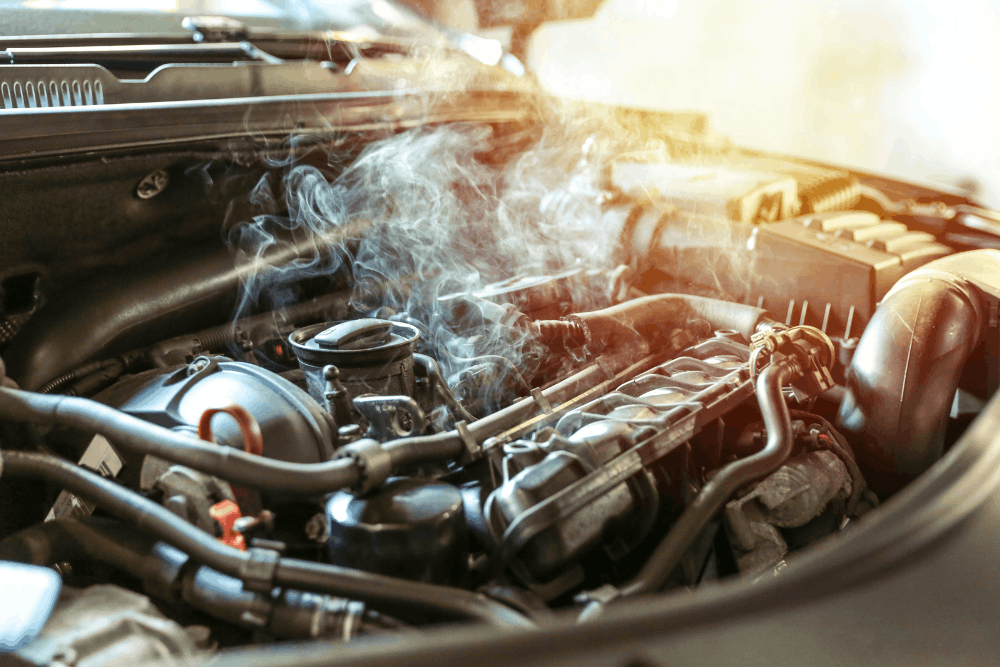
- White smoke or steam from under the hood: This is a serious warning that coolant is reaching areas it shouldn’t
If you notice any of these signs, don’t wait. The longer a compromised cooling system runs, the more damage it causes to surrounding components. Schedule a cooling system inspection at Premium Automotive in McAllen, TX, today. Visit us at 711 W Dove Ave, McAllen, TX 78504, book an appointment online, or call us at 956-618-9877.
Cooling System Flush vs. Just Topping Off Coolant
This is one of the most common misconceptions we run into. Adding coolant to a low reservoir is not the same as a cooling system flush, and understanding the difference matters.
| Feature | Topping Off Coolant | Professional Cooling System Flush |
|---|---|---|
| Restores fluid level | Yes | Yes |
| Removes degraded coolant | No | Yes |
| Clears internal deposits and scale | No | Yes |
| Inspects hoses, clamps, and the thermostat | No | Yes |
| Pressure tests for leaks | No | Yes |
| Uses the correct coolant type for your vehicle | Not guaranteed | Yes |
| Addresses internal corrosion | No | Yes |
Using the wrong coolant type or mixing incompatible fluids can trigger chemical reactions inside the system that speed up corrosion. A proper flush performed by trained technicians ensures the right product goes in every time, matched specifically to your vehicle’s requirements.
What Makes Cooling System Service Different at Premium Automotive in McAllen, TX
Not every shop approaches cooling system service the same way. At Premium Automotive in McAllen, TX, our process starts with a complimentary initial analysis so you know exactly what your vehicle needs before any work begins. Nothing is done without your authorization.
As a AAA Approved auto repair facility, we’re held to a higher standard of service, transparency, and customer satisfaction every time you visit.
Our ASE-certified, dealer-level trained experts use the same diagnostic equipment found at dealerships to evaluate your cooling system accurately. Whether you’re driving a Ford F-150, a Mercedes, a Honda, or a Dodge Ram, we have the tools and training to service it properly.
What you can expect when you bring your vehicle in:
- Full system inspection: Radiator, hoses, thermostat, water pump, and cap checked thoroughly
- Accurate diagnostics: Dealer-level equipment to identify issues that visual inspections can miss
- Transparent reporting: We show you what we find and explain the why before any repair is approved
- Warranty coverage: The majority of our work comes with an industry-leading 5-year/60,000-mile warranty
- Convenience options: Free pickup and delivery, loaner vehicles, local shuttle service, and 24/7 secure drop-off
We’ve been serving McAllen and the Rio Grande Valley since 2006, and our approach has always been the same: honest service, clear communication, and repairs done right the first time.
How Often Should McAllen Drivers Service Their Cooling System
General guidelines suggest a cooling system flush every 30,000 miles or two years. In the Rio Grande Valley, annual inspections are worth considering, given the accelerated coolant breakdown caused by extreme heat.
A good rule of thumb for McAllen drivers:
- Every year: Have your coolant inspected for condition, concentration, and pH level
- Every 2 years or 30,000 miles: Schedule a full cooling system flush and component inspection
- Any time you notice a warning sign: Don’t wait for a scheduled interval
Staying proactive costs far less than reacting to an overheated engine. Head gasket repairs, cracked engine blocks, and radiator replacements are all consequences of a cooling system that didn’t get the attention it needed.
FAQs About Cooling System Flush and Radiator Repair in McAllen, TX
How often should I flush my radiator in McAllen?
Most vehicles need a cooling system flush every 30,000 miles or two years, but South Texas heat accelerates coolant breakdown. Annual inspections are a smart habit for Rio Grande Valley drivers to stay ahead of cooling system issues.
What are the signs of a failing cooling system?
Common signs include a rising temperature gauge, coolant leaks, a sweet smell near the engine, weak heat output, or steam from under the hood. Catching these early prevents more serious and expensive engine damage.
Can driving in hot weather cause radiator damage?
Yes, extreme heat reduces the radiator’s ability to dissipate heat efficiently and speeds up internal corrosion and deposit buildup. South Texas driving conditions put more stress on the radiator than cooler climates.
What happens if I ignore a coolant leak?
A coolant leak left unaddressed leads to low fluid levels, overheating, and eventually serious engine damage, including head gasket failure or a cracked engine block. Early repair is always the less expensive option.
Is a cooling system flush the same as adding coolant?
No. Topping off coolant only restores fluid level without addressing degraded fluid or internal buildup. A full flush cleans the system, removes deposits, inspects components, and replaces old coolant with fresh fluid matched to your vehicle.
Schedule Your Radiator Repair and Cooling System Service in McAllen, TX
If your vehicle hasn’t had a cooling system service in the last two years, or if you’ve noticed any of the warning signs above, now is the right time to get it checked. The McAllen heat isn’t going anywhere, but a properly maintained cooling system can handle it.
Premium Automotive McAllen
711 W Dove Ave, McAllen, TX 78504
956-618-9877
Request an Appointment Online
We’re proud to serve the Rio Grande Valley through our additional locations:
- Edinburg – 122 N McColl Rd, Edinburg, TX 78541 | 956-318-5126
- Harlingen (Premium Collision) – 202 E Adams Ave, Harlingen, TX 78550 | 956-428-0890
We drive together.