OEM vs Aftermarket Collision Parts: What’s the Best Choice?
Share this post:
After a collision, one of the most consequential decisions you’ll face isn’t about picking a paint color or arranging a rental car. It’s about which parts go back on your vehicle. The choice between OEM and aftermarket collision parts directly affects your vehicle’s safety, fit, long-term durability, and resale value. At Premium Collision in Harlingen, TX, an I-CAR Gold Class certified shop, our team helps customers understand exactly what these options are, how they differ, and why that decision carries more weight than most drivers initially realize.
What Are OEM Collision Parts?
OEM stands for Original Equipment Manufacturer. OEM parts are made by or for your vehicle’s manufacturer using the same specifications, materials, and tolerances as the parts that came on your vehicle from the factory.
Every structural panel, bracket, and body component was engineered to precise standards. OEM parts match those standards exactly, which matters significantly for things like crumple zones, panel alignment, and how your vehicle’s body structure responds in a subsequent collision.
Because Premium Collision holds OEM certifications from nine manufacturers, including GM (Buick, Cadillac, GMC, and Chevrolet), Honda and Acura, Hyundai, Genesis, Kia, Nissan, Infiniti, and FCA (Chrysler, Dodge, Jeep, Fiat, and RAM), our technicians are factory-trained to source and install OEM parts for these specific makes. That certification isn’t just a badge on the wall; it means we’ve met each manufacturer’s standards for training, equipment, and certified repair procedures.
What Are Aftermarket Collision Parts?
Aftermarket parts are manufactured by third parties, not your vehicle’s original manufacturer. They’re designed to fit a wide range of makes and models and are typically available at a lower price point than OEM parts.
That lower cost is what makes aftermarket parts attractive to insurance companies, which routinely specify non-OEM parts on collision repair estimates to reduce their claim exposure. But a meaningful gap exists between price and performance for structural and safety-critical components.
Fit and Finish Problems
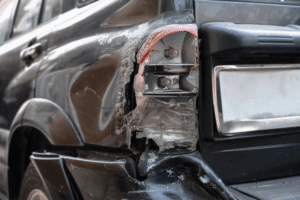
Aftermarket collision parts may not align with factory panel gap tolerances. Even a small misalignment creates downstream problems: wind noise, water intrusion, irregular paint wear patterns, and in some cases, panels that don’t close the way they should.
Safety and Structural Concerns
Your vehicle’s crumple zones, door beams, and structural panels were engineered to work together as a system. Aftermarket substitutes may not absorb or distribute impact energy the same way in a subsequent collision. For vehicles equipped with advanced driver assistance systems, this becomes even more critical; a bumper cover or windshield that’s even slightly off-spec can throw off radar sensor and camera calibration.
Warranty and Resale Value Impact
Installing non-OEM parts can affect manufacturer warranty coverage if a specific system fails and the manufacturer determines that part caused the failure a nuance many drivers aren’t aware of when comparing repair options. It can also reduce resale value if a buyer or dealer discovers non-OEM repairs in a vehicle history report, particularly for newer or higher-value vehicles.
What Certified Collision Centers Actually Recommend
Certified collision repair centers with OEM credentials follow the parts and procedures the manufacturer specifies for restoring a vehicle to pre-accident condition. At Premium Collision, our certifications from nine manufacturers mean we’re trained, equipped, and accountable to those standards on every qualifying repair.
Our I-CAR Gold Class certification requires continuous training so that our technicians stay current with the latest repair procedures, adhesive bonding techniques, and material technologies as vehicles evolve. Fewer than 10% of collision shops nationwide hold this designation. That’s a meaningful distinction for anyone trusting a shop with their vehicle after a collision.
Our team at Premium Collision is ready to walk you through your repair options. Visit us at 202 E Adams Ave, Harlingen, TX 78550, or call 956-428-0890 to get started.
Does Insurance Cover OEM Parts?
This is one of the most common questions we hear at Premium Collision after a collision claim is opened. The honest answer is that it depends on your specific policy.
Standard insurance policies often default to aftermarket or salvage parts to reduce claim costs. That’s not always the end of the conversation, though:
- Some policies include OEM endorsements that guarantee factory parts
- You have the right to discuss part selection with your insurer before repair authorization
- In certain situations, state regulations limit when insurers can require non-OEM parts on newer vehicles
Our team at Premium Collision assists customers with insurance coordination and can help you understand your options before the repair process begins. The insurer’s default estimate isn’t always the final word on how your vehicle gets repaired.
When Aftermarket Parts May Be Acceptable
Not every aftermarket part raises a safety concern. Non-structural cosmetic components such as trim pieces, exterior mirrors, or replacement light lenses have a smaller safety impact than structural panels or crumple zone components.
A reputable certified collision center will clearly explain which parts on your specific repair are safety-critical and which are lower-stakes cosmetic items. That’s a conversation our team at Premium Collision always has with customers before any work begins. You deserve to know exactly what’s going back on your vehicle and why.
Harlingen Drivers Count on Premium Collision for Certified Repair
Harlingen drivers dealing with collision damage have options throughout the Rio Grande Valley. Premium Collision stands apart by holding OEM certifications from nine manufacturers, I-CAR Gold Class status, and membership in the GM Collision Repair Network, all backed by a team that’s committed to transparent, relationship-based service from the first phone call through final delivery.
Our collision shop uses a Car-O-Liner for frame straightening, professional-grade equipment that restores your vehicle’s structural geometry to factory specifications. Every collision repair at our Harlingen location also comes with a lifetime warranty because we stand behind our work completely.
Premium Collision serves Harlingen, Brownsville, and the greater Cameron County area.
Why Choose Premium Collision for Certified Collision Repair in Harlingen, TX
- OEM Certified for Nine Manufacturers: We hold factory certifications from GM, Honda, Acura, Hyundai, Genesis, Kia, Nissan, Infiniti, and FCA brands, meaning our repairs meet each manufacturer’s exact procedural standards.
- I-CAR Gold Class Certified: Fewer than 10% of shops nationwide hold this designation, which requires rigorous and ongoing technician training across all repair roles.
- GM Collision Repair Network Member: Certified to repair all GM vehicles including Chevrolet, Buick, GMC, and Cadillac using GM-approved procedures and genuine parts.
- Car-O-Liner Frame Straightening: Professional structural restoration to factory specifications on every frame repair.
- Lifetime Warranty on Collision Repairs: Our Harlingen collision work is backed by a lifetime warranty; we stand behind every repair we complete.
- Insurance Claim Assistance: Our team helps you navigate the claims process and understand your part selection options before work begins.
- Transparent Repair Process: We explain every repair decision, every parts recommendation, and every step involved before we start on your vehicle.
FAQs About Collision Repair and Parts in Harlingen, TX
What's the difference between OEM and aftermarket collision parts?
OEM parts are manufactured by or to your vehicle maker’s exact specifications, while aftermarket parts are produced by third parties and may not match factory tolerances. The difference matters most for structural and safety-critical components that determine how a vehicle performs in a second collision.
Are OEM parts worth the extra cost?
For structural panels, crumple zone components, and body parts tied to driver assistance system calibration, OEM parts consistently offer better fit, safety performance, and long-term durability. For non-structural cosmetic items, the practical difference is often smaller.
Does insurance cover OEM parts?
Standard insurance policies often specify aftermarket or salvage parts by default to control claim costs. Some policies include OEM endorsements, and customers can negotiate part selection with their insurer. State regulations may also restrict when non-OEM parts can be required on newer vehicles, depending on the circumstances of the claim.
Which parts are safer after a collision?
OEM structural parts, including door beams, frame sections, and crumple zone panels, are engineered to perform in a specific, predictable way in a subsequent collision. Using certified OEM parts for structural repairs ensures those engineered safety systems work as the manufacturer intended.
What do certified collision centers recommend?
OEM-certified collision centers follow manufacturer repair procedures and part specifications, which means recommending OEM parts for safety-critical repairs. The goal is to restore your vehicle to pre-accident condition using the same materials and methods the factory designed it around.
Schedule Your Certified Collision Repair in Harlingen, TX at Premium Collision Today
A collision is stressful enough without having to worry about whether your vehicle was repaired correctly afterward. At Premium Collision, our I-CAR Gold Class certified, OEM-credentialed team uses factory parts and procedures to restore your vehicle to the standard it deserves.
Visit us at 202 E Adams Ave, Harlingen, TX 78550, or call 956-428-0890 to get started. At Premium Collision, we drive together.